
Number Porting
How to keep your business number when moving to VoIP, and what can delay the process.
If your business wants to move to VoIP without changing the phone number customers already know, number porting is usually a key part of the migration plan. This page explains what porting is, how the process normally works, what tends to cause delays, and how to prepare properly before a change goes live.
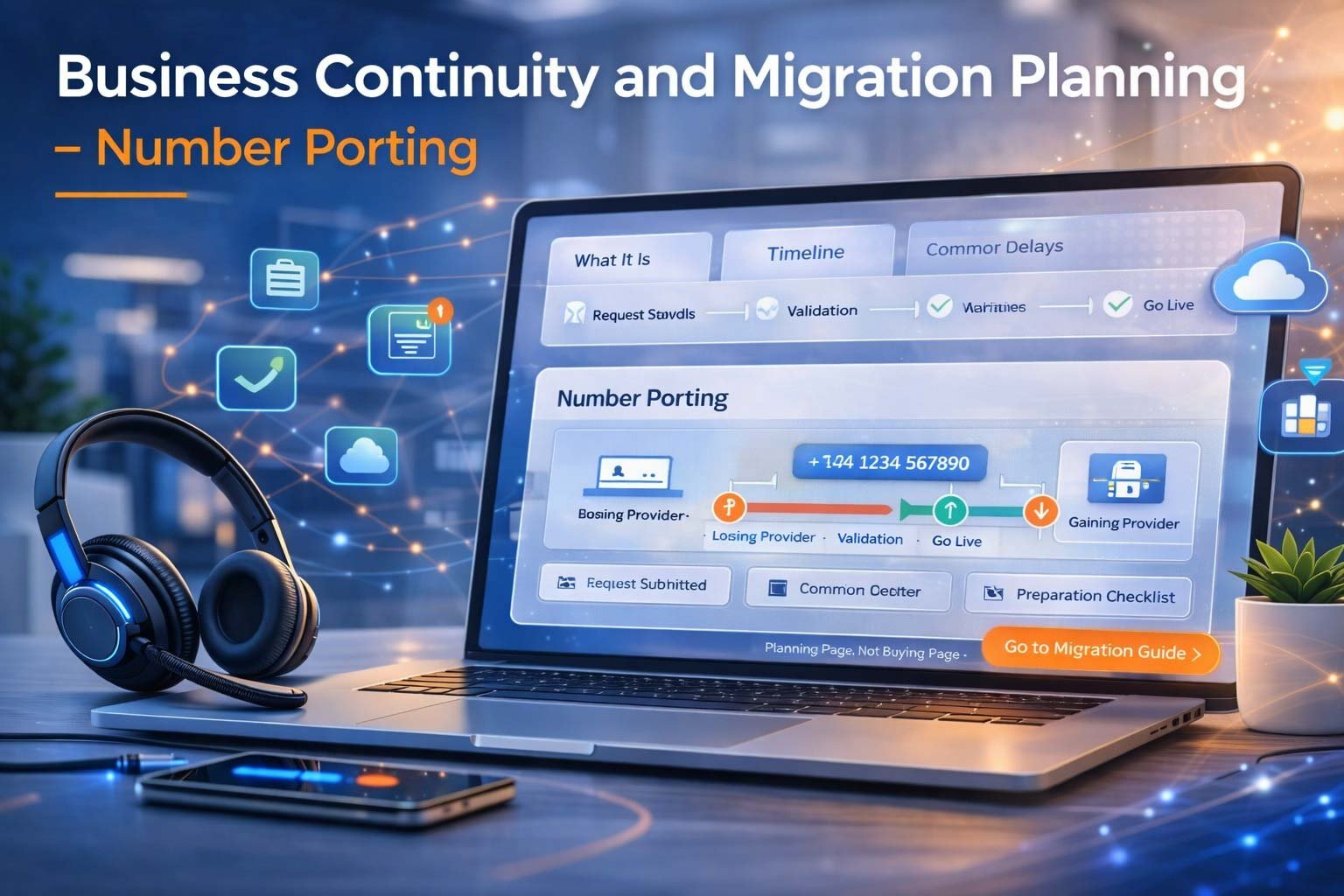
Planning page, not buying page
Use this page to understand continuity and preparation. Use the migration guide once you are ready to plan the wider move.
What is number porting?
Number porting is the process of moving your existing business phone number from one service or provider setup to another so you can keep the same number.
For most businesses, that matters because the number is already tied to customer recognition, printed materials, websites, local listings, invoices, vehicles, and internal workflows. Changing it unnecessarily can create confusion and friction.
When a business moves to VoIP, number porting is often one of the most important continuity tasks in the project. It is not just a telecom admin step. It is part of protecting customer contact routes while the service changes underneath.
Porting usually works well when planned properly, but delays are more likely when details do not match, the current service status is unclear, or the number is treated as an afterthought instead of a core migration dependency.
Main purpose
Keep a familiar business number while changing the service behind it.
Why it matters
It supports continuity for customers, teams, and business records during a migration.
Where issues happen
Mismatched account details, unclear ownership, timing mistakes, or active service complications.
Best next step
Treat porting as a formal part of the migration plan, not a last-minute task.
How the number porting process usually works
Every provider workflow differs slightly, but most business porting projects follow the same practical pattern. The key is preparation, validation, and carefully timed cutover planning.
Confirm the current setup
Check exactly which number is in use, who owns it, which provider currently serves it, and whether there are linked services or contract details that matter.
Gather matching details
Collect the account name, service address, billing details, and any required reference data so the information lines up with the current provider record.
Submit the port request
The gaining provider usually coordinates the request, but the success of the submission depends heavily on the accuracy of the source information.
Validate and schedule
Once accepted, the process moves toward a planned port date. The business should align users, devices, routing, and communications around that cutover.
Cut over and test
On the agreed date, the number moves to the new service. Inbound and outbound testing should be treated as part of the go-live process.
Common reasons number ports get delayed
Most porting problems are not caused by the idea of porting itself. They usually come from bad source data, unclear service ownership, or poor timing between the old and new setup.
Mismatched account details
If the submitted information does not match the existing provider record closely enough, the request may be rejected or need rework.
Unclear ownership
If nobody is certain who controls the current number or which legal entity holds the service, the project slows down quickly.
Wrong timing
Porting needs to line up with the wider go-live plan. Poor sequencing can create internal pressure or service confusion at cutover.
Linked service complexity
Sometimes the number sits inside a wider service picture that needs reviewing before the move can be planned with confidence.
Readiness checklist before porting
What to prepare for go-live
Good porting is usually about disciplined preparation, not guesswork at the last minute.
Common mistakes businesses make with number porting
Leaving porting too late
Businesses often focus on devices and features first, then realise late in the project that the number itself needs formal migration planning.
Assuming the number will “just move”
Porting is usually manageable, but it still needs correct source data, validation, and timing. It is not automatic background admin.
Not linking porting to the wider migration plan
The number cutover has to line up with user setup, routing rules, testing, and communications. Treating it in isolation creates risk.
Frequently asked questions
Quick answers for businesses worried about continuity during a move to VoIP.
What is number porting in simple terms?
It means moving your current business phone number to a new service so you can keep using the same number after the migration.
Why is number porting important for businesses?
Because the number is often already visible to customers, prospects, suppliers, staff, and public listings. Keeping it helps protect continuity.
What usually causes porting delays?
Mismatched account details, uncertainty around number ownership, timing mistakes, and poor coordination with the wider migration plan are common causes.
Should I plan number porting early or late in the project?
Early. It should be treated as a core continuity task rather than something left until the end of the project.
Does this page tell me which provider to buy?
No. This page focuses on continuity and planning. For the wider move, use the migration guide.
What should I do after reading this page?
If number continuity is a live issue in your project, move into the migration guide so the port can be planned as part of the broader service change.
Ready to plan the wider move properly?
Once you understand how number porting works, the next step is to place it inside the full migration sequence so continuity, testing, timing, and service dependencies are handled together.