
VoIP Security
What UK businesses should know about VoIP security before they shortlist providers.
If you are asking whether VoIP is secure, the better question is usually this: what controls, permissions, processes, and provider practices are in place to keep the system secure for daily business use? This page explains the basics, the main risks, and the checks worth making before you move into provider evaluation.
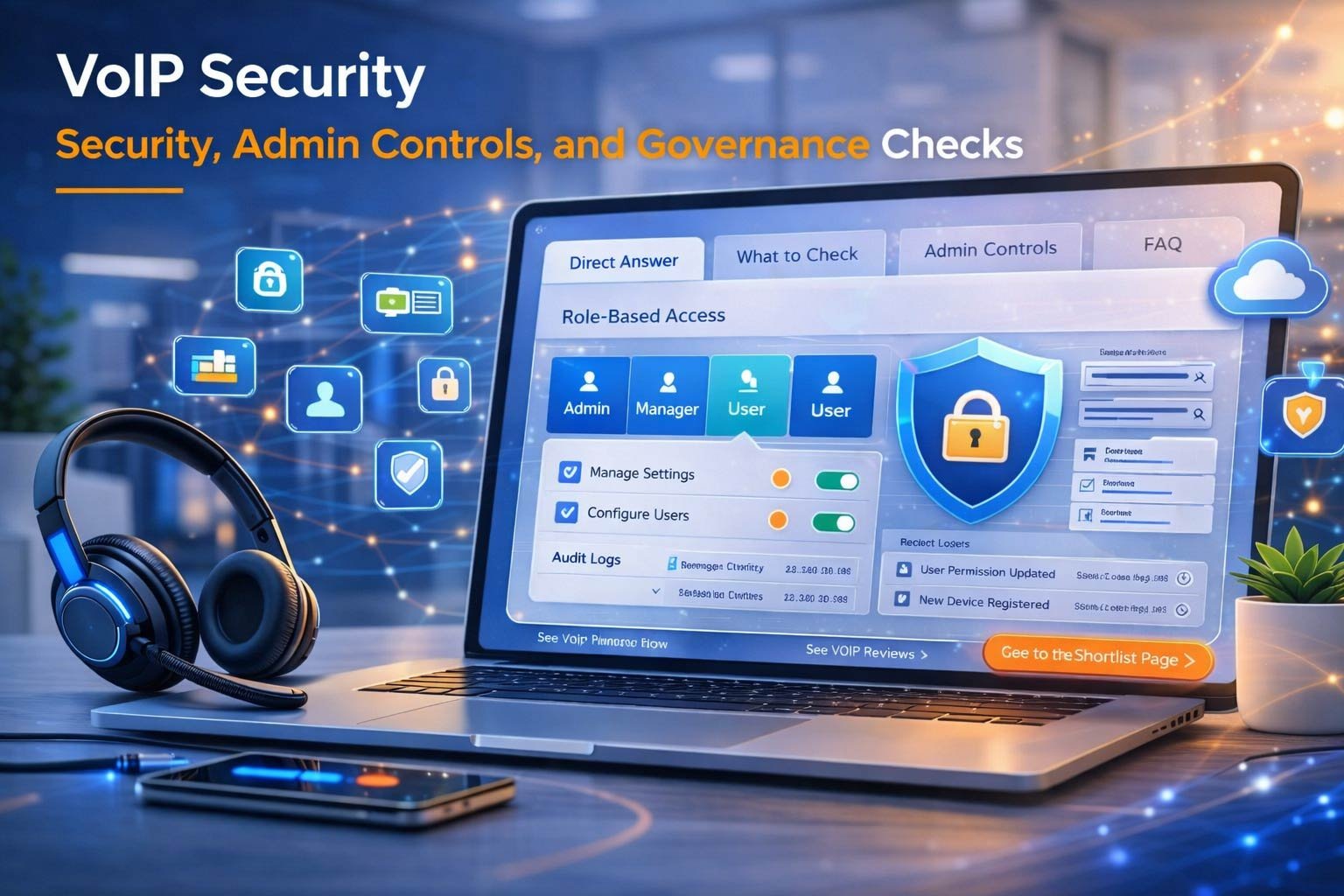
Security explainer page
This page explains the questions to ask. Use reviews and shortlists after the security basics are clear.
Is VoIP secure?
VoIP can be secure for business use, but security depends on the controls, configuration, provider practices, and day-to-day administration around the system.
That matters because VoIP is not a single security state. It is a service model. A well-managed VoIP setup can support strong access control, permissions, routing oversight, and administrative discipline. A poorly managed setup can expose the business to avoidable risk.
So the real question is not whether VoIP is “safe” in the abstract. It is whether your chosen provider and your internal team can manage the system with the right controls in place.
For early-stage buyers, the most useful approach is to understand the security categories that matter: account protection, admin permissions, device and user management, call-routing governance, monitoring, and how clearly the provider explains its operational controls.
Main principle
Security depends on controls and management, not just the label “VoIP”.
Biggest buyer error
Asking only “is it secure?” instead of “how is it secured and governed?”
What matters most
Permissions, monitoring, account protection, admin discipline, and provider transparency.
Best next step
Use reviews and shortlists only after you know which security questions matter to your business.
The main security areas businesses should check
A good VoIP security review is usually broader than technical jargon. It should cover who can access what, how changes are controlled, and how clearly the provider explains its safeguards.
Account protection
User login protection, administrative access controls, and sensible barriers around account misuse or weak internal access practices.
Permissions and roles
The system should make it clear who can change routing, manage users, add devices, review logs, or alter sensitive business settings.
Monitoring and visibility
Buyers should understand how the service surfaces unusual activity, admin events, call-routing changes, or operational issues worth reviewing.
Provider transparency
A provider should be able to explain its security approach in a way that gives decision-makers confidence rather than relying on vague reassurance.
How to think about VoIP security in practice
A useful way to assess security is to work from access, to control, to monitoring, to governance. That keeps the review practical and relevant for business decision-makers.
Who can access the system?
Start with users, admins, devices, and the clarity of role-based access. If access is vague, security is already weaker than it should be.
What can they change?
Understand whether users can alter routing, add endpoints, change permissions, or access sensitive system areas without appropriate oversight.
How is activity seen?
Look for practical visibility into administrative events, account changes, suspicious behaviour, or operational anomalies worth reviewing.
How is it governed?
Security improves when the business treats VoIP as a managed operational system with ownership, processes, and periodic review.
Admin controls worth asking about
Governance checks worth making
Common mistakes buyers make around VoIP security
Treating security as a vague yes or no
That usually leads to weak evaluation. The better approach is to break security into access, permissions, oversight, and provider clarity.
Ignoring internal admin discipline
Even a well-designed service can become riskier when too many people have broad access or nobody owns system governance properly.
Confusing feature depth with security quality
A long feature list is not the same as strong security governance. Buyers still need to understand how the system is controlled and monitored.
When to move into reviews
Go to reviews once you already know which security questions matter and want to look at provider-specific depth, explanations, and overall fit.
When to move into the shortlist page
Use the shortlist page once your baseline security concerns are clear and you want a broader market view before narrowing to specific providers.
Frequently asked questions
Quick answers for buyers trying to understand the security side of business VoIP.
Is VoIP secure enough for business use?
It can be, but the security level depends on how the service is configured, administered, and governed in practice.
What should I ask about first?
Start with account protection, role-based permissions, administrative visibility, and how clearly the provider explains its security controls.
Does provider choice matter for security?
Yes. Different providers explain and structure controls differently, which is why reviews become more useful after you know what to look for.
Is this page a provider review?
No. This page explains the security questions and baseline checks. For provider-specific depth, go to reviews.
Should I move to the shortlist page after this?
Yes, if your security baseline is clear and you want a broader view of possible providers. Use Best VoIP providers in the UK.
What is the biggest mistake buyers make?
Treating security as a vague checkbox instead of asking who can access the system, what they can change, and how that is governed.
Now move into the right next page
Once you understand the security questions, use that knowledge either to review providers in more depth or to build a broader shortlist with clearer criteria.