
VoIP vs Landline
A practical guide for UK businesses comparing older phone setups with modern VoIP systems.
If your business is still weighing traditional landlines against a VoIP phone system, this page explains the real differences in cost structure, flexibility, maintenance, and future-readiness. It is an informational guide, not a provider ranking page.
Informational comparison
This page explains the difference between the two models. Use the shortlist and PSTN pages only after the comparison is clear.
VoIP vs landline in one clear answer
A landline relies on traditional fixed phone-line infrastructure. VoIP uses an internet connection to deliver business calling and related features.
That difference changes more than just the technical delivery method. It affects how your business thinks about devices, call routing, setup changes, scaling, support, and what “future-ready” means.
A landline is usually associated with older line-based telephony. It often feels familiar and straightforward, but it can also be more rigid when businesses want to support hybrid teams, make changes quickly, or handle calls across multiple locations and devices.
VoIP shifts the service model toward internet-based delivery. That often gives businesses a wider range of device options, more flexible administration, and a stronger fit for modern ways of working. It does not mean every VoIP system is automatically better for every organisation. It means the comparison should focus on operational fit, not just habit or headline assumptions.
Landline model
Fixed traditional line infrastructure, familiar setup, often less adaptable when business needs change.
VoIP model
Internet-based calling with broader device flexibility, easier routing changes, and a stronger fit for modern business workflows.
What changes most
Cost assumptions, flexibility, maintenance expectations, and long-term planning.
Best next step
Understand the comparison first, then move into PSTN planning or a provider shortlist when you are ready.
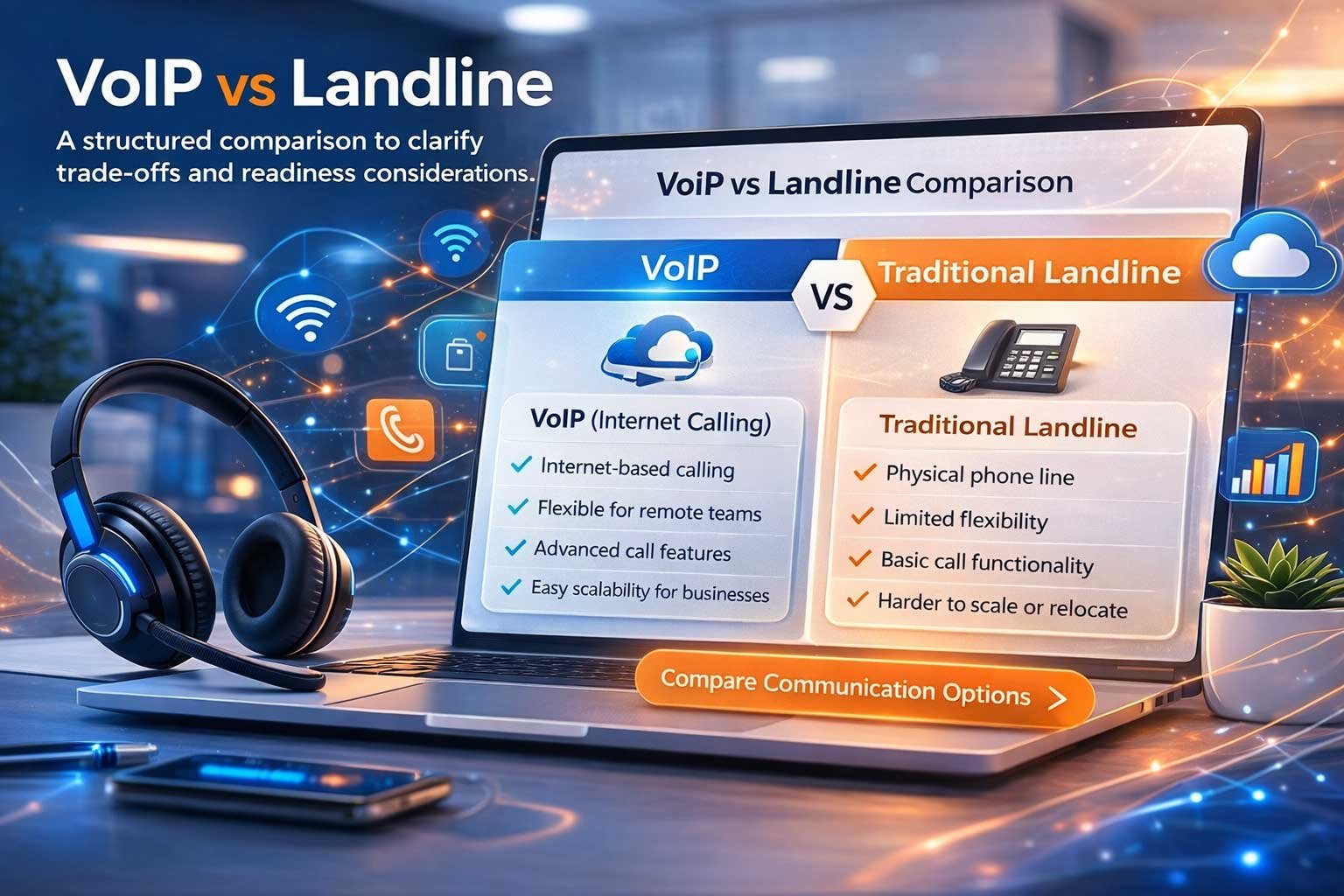
Side-by-side comparison: VoIP vs landline
This table is designed to help beginners see the structural differences without turning the page into a buying guide.
| Area | VoIP | Landline |
|---|---|---|
| How calls are delivered | Over an internet connection through a provider platform and connected devices. | Over traditional fixed-line phone infrastructure. |
| Typical device options | Desk phones, laptops, softphones, mobile apps, headsets, browser-based tools. | Usually tied more closely to fixed physical handsets and line-based usage patterns. |
| Flexibility | Often better suited to hybrid teams, changing call flows, and multi-location working. | Usually more rigid when teams need to move, scale, or work across devices and locations. |
| Call handling | Typically supports broader routing logic, menus, ring groups, and software-driven controls. | Can feel more basic or constrained depending on the setup and supporting system. |
| Maintenance mindset | More service-led and software-led, with changes often handled through provider portals or admin controls. | More closely associated with legacy line assumptions and older maintenance patterns. |
| Scaling and change | Often easier to adjust users, routing, devices, or locations as the business changes. | Can be less convenient when changes are frequent or when business structure becomes more distributed. |
| Future-readiness | Usually aligned more closely with modern internet-based business communications. | More closely associated with legacy telephony thinking and traditional line dependencies. |
Cost structure: the comparison most businesses start with
Cost matters, but the comparison is rarely as simple as “one is cheap and one is expensive.” The better question is how each model fits the way your business works and changes over time.
Landline cost thinking
Businesses often think in terms of fixed lines, familiar hardware expectations, and legacy service assumptions. That may feel predictable, but it can also hide rigidity costs when needs change.
VoIP cost thinking
Businesses usually think more in terms of service configuration, users, call handling capability, device flexibility, and the ease of making changes over time.
What to compare properly
Look beyond the headline monthly figure. Compare how well each model fits routing needs, future changes, remote work patterns, and the business experience you want callers and staff to have.
The four areas most businesses care about
These are usually the real decision drivers when comparing a traditional landline mindset with a modern VoIP setup.
Flexibility
VoIP is usually stronger when users need to work across devices, sites, or hybrid arrangements. Landlines are more rooted in fixed-location assumptions.
Maintenance
VoIP usually feels more software-led and service-led. Landlines are more closely tied to older infrastructure expectations and a more static setup model.
Call handling
Modern routing, menus, and team-based flows are usually easier to think about and administer in a VoIP environment.
Future-proofing
Businesses increasingly want communications built around internet delivery and adaptable software, not traditional fixed-line assumptions.
If you still rely on traditional lines
For some businesses, this comparison is not just a preference question. It is also about understanding what older line-based dependencies still exist across the business and whether they need a proper readiness plan.
That is especially relevant if you still use traditional telephony assumptions in multiple parts of the operation or have not yet mapped out what still depends on older line-based services.
What to check next after this comparison
Common mistakes when comparing VoIP and landlines
Mistaking familiarity for best fit
Landlines may feel familiar, but familiarity alone does not make them the best operational choice for a business that needs flexibility and change.
Reducing the decision to one price line
The better comparison is about fit, flexibility, call handling, and future change, not just the most visible monthly figure.
Ignoring the wider legacy context
For some businesses, the comparison should trigger a broader review of legacy line dependencies rather than staying as a simple handset decision.
Frequently asked questions
Quick answers for businesses comparing traditional telephony with a VoIP approach.
What is the basic difference between VoIP and a landline?
A landline uses traditional fixed-line phone infrastructure. VoIP uses an internet connection to deliver calling and related phone-system features.
Is VoIP always better than a landline?
Not automatically. The better question is which model fits your business operations, call handling needs, device mix, and future plans more effectively.
Why do businesses often prefer VoIP for modern working patterns?
Because it is usually more adaptable across devices, locations, and changing team structures than traditional line-based assumptions.
Should I think about PSTN changes when comparing VoIP and landline?
Yes. If your business still depends on older line-based setups, that comparison often connects directly to wider readiness planning. See PSTN switch-off guidance.
Is this page the right place to choose a provider?
No. This page explains the structural differences between the two models. For provider research, go to Best VoIP providers in the UK.
What should I do after reading this page?
If the main issue is wider legacy-line planning, go to the PSTN page. If the comparison is now clear and you want to explore options, move to the shortlist page.
Now choose the right next step
Once the difference between VoIP and landline is clear, move into the page that matches your stage: broader PSTN planning or a structured shortlist.