UK Phone Number Checker

Check UK phone number formats and original Ofcom range-allocation evidence

Enter a UK telephone number to identify its number type and format, view original allocation information where available, and understand what the result cannot confirm. Free basic lookup, with no sign-up required.
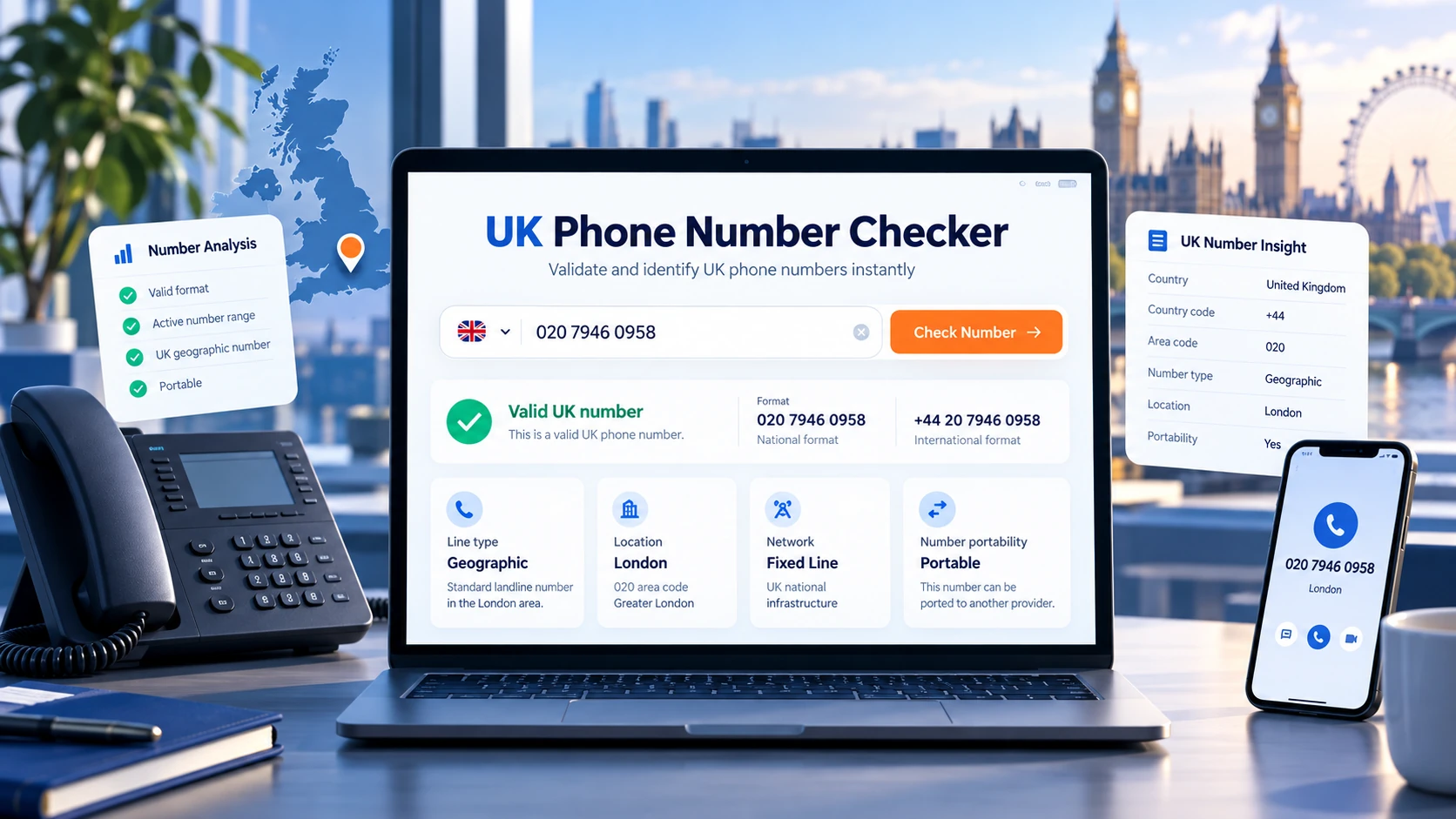
UK phone number checker illustration showing telephone number verification

Free UK number lookup tool

Use the checker for numbering facts, then read the result limitations. For choosing number types, see the business numbers guide. For transferring numbers, use the porting guide.

Check a UK phone number

Use the checker first, then read the result in context. A valid format or allocated range does not confirm the number is active, identify its subscriber, or prove the current network.

What this lookup checks — and what it cannot

This is a numbering-data check, not a live-line test, a subscriber directory or a trusted-caller verdict. An original allocation holder may differ from the network currently serving a ported number.

Evidence note: The checker reports numbering-plan facts and original range-allocation information where available. For live-line status, subscriber identity, exact tariffs or porting eligibility, contact the relevant operator.

Understand your UK number result

Read the result as three separate pieces of evidence: number format, numbering category and historical allocation data where the installed dataset can supply it.

Check a UK phone number’s format and numbering type, then review original Ofcom number-block allocation where available. Use these facts to understand business telephone numbers before choosing or switching services. This does not verify the current network, subscriber or live-line status.

UK / +44 formats 01 / 02 / 03 / 07 0800 / 084 / 087 / 09 Ofcom range allocation

Check a UK telephone number

Enter a UK landline, mobile, non-geographic, premium-rate, personal numbering or directory enquiry number. The result appears instantly below with practical telecom guidance.

Supports national format, +44 and 0044. Imported Ofcom data is used when available; otherwise the checker still applies UK numbering rules.
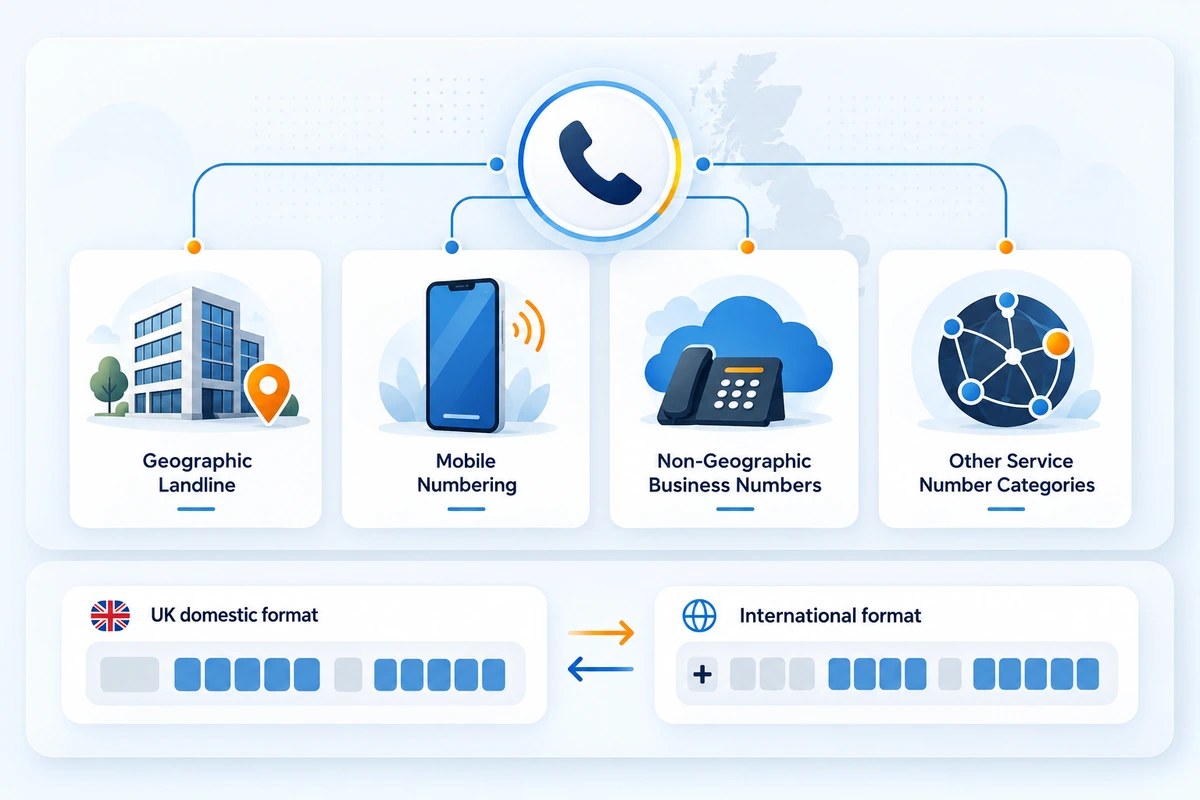
Illustration of geographic, mobile and non-geographic UK telephone number categories

Format & numbering type

Check the national or +44 format and learn whether the prefix is geographic, mobile, non-geographic or another service class.
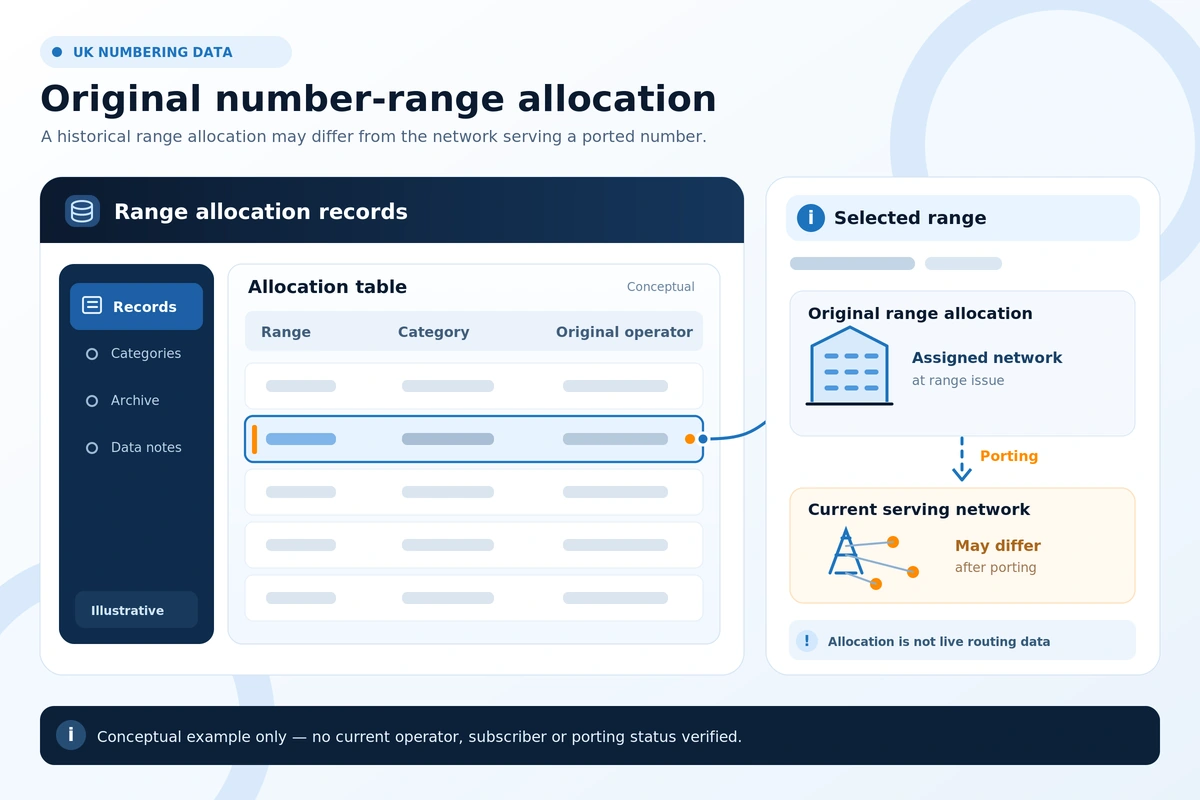
Illustration of UK telephone number range allocation records and telecoms network data

Original range allocation

Where bundled Ofcom range data is available, inspect its original allocation details without confusing these with today’s serving network.

RESULT INTERPRETATION

What a check does not prove

A matching UK number pattern does not prove reachability, subscriber identity, caller authenticity, tariff, porting eligibility or ownership. Confirm these separately with the relevant provider.

UK number types at a glance

Use these common prefix families to interpret a basic number check. These are general classifications—not a live network lookup, subscriber record or pricing quote.

Number classTypical prefixesUsual purposeWhat the lookup showsImportant limitationNext step
Geographic
UK area codes
01 / 02Landline-style geographic numberingFormat, area code, original range allocation where availableArea code does not prove the caller’s location or a live lineCheck number
Non-geographic
Standard-rate class
03Organisations and services not tied to a town or cityNumber type and allocation information when availableExact call cost still depends on contract and providerRead result
Mobile
Not all 07 ranges
071–075, 077–079Mobile numbering rangesMobile classification and original range-holder evidencePorting means original allocation is not current networkCheck number
Freephone
Free to UK consumers
0800 / 0808Freephone customer and service linesService classification and any available range dataOrganisational routing and live status are not verifiedCheck number
Service-charge
Check before calling
084 / 087Numbers that may involve access and service chargesNumber classification, not an individual tariff quoteCharges depend on the number and your operatorCost limits
Premium rate
Higher-cost service
09 / 118Premium services or directory enquiriesNumber classification where the prefix is recognisedNever infer the price from the prefix aloneVerify charges

Scroll / swipe the table horizontally on smaller screens.

Special classes including 055, 056, 070 and 076 have distinct rules. In particular, 070 is personal numbering, not ordinary mobile numbering, and much of 076 is used for paging, subject to exceptions.

Practical business number-checking scenarios

Six common situations in which a number check is useful, and where independent verification is still required.

UK phone number evidence for business decisions

Business number records

Use case01

Validate a customer-facing number

FormatUK record
AllocationWhere available
Active lineUnverified
SubscriberNot shown
Key checks
  • Check that a stored number uses a plausible UK format.
  • Read the geographic or non-geographic category in context.
  • Confirm active service with the owning organisation.
Watch-out
  • A valid number in your CRM is not necessarily connected.

Geographic area code

Use case02

Interpret an 01 or 02 number

Number class01 / 02
AreaPrefix-based
Live locationUnverified
AllocationHistorical
Key checks
  • The geographic prefix can identify a numbering area.
  • A geographic code does not prove the caller is in that area.
  • Compare a specific number with original allocation records when available.
Watch-out
  • Do not use area code alone to verify a caller’s physical location.

Mobile number records

Use case03

Understand mobile range evidence

Number classMobile
FormatUK / +44
Original rangeHistorical
Current networkNot proven
Key checks
  • Identify recognised UK mobile prefixes, excluding special 07 categories.
  • Ofcom range allocations are not subscriber records.
  • Network porting can separate an original holder from the current provider.
Watch-out
  • Do not infer present network or subscriber identity from the allocation.

Service-charge numbers

Use case04

Check 084, 087 or premium ranges

Number classService
Prefix084 / 087
Premium09 / 118
PriceOperator-dependent
Key checks
  • Determine the broad number category first.
  • Some number classes can attract additional access or service charges.
  • Check actual charges with the service and your network provider.
Watch-out
  • A number checker is not a current price quotation.

Number-porting preparation

Use case05

Plan to keep a company number

Current lineConfirm
AuthorisationRequired
Range allocationNot enough
PortabilityProvider check
Key checks
  • Check the format and identify the numbering class.
  • Verify the service and account details with your existing provider.
  • Follow the gaining provider’s porting process.
Watch-out
  • This tool does not determine whether a number is portable.

Unknown caller checks

Use case06

Understand reports and spoofing

Format checkLimited
Caller identityNot proven
Public reportsUnverified
SpoofingPossible
Key checks
  • A number matching a range does not authenticate the caller.
  • Community call reports represent unverified user submissions.
  • Contact the organisation through an independently verified channel.
Watch-out
  • Do not rely on caller ID or an unverified report for security decisions.

What to check before relying on a result

The tool gives a useful starting point for telephone-number records. For procurement, migration or suspicious calls, combine it with provider confirmation.

Check the numbering evidence

  • Does the number use a plausible UK format, and what class does the prefix indicate?
  • Does the result show an original allocation entry, and is the installed dataset current enough for your decision?

Verify real-world status separately

  • Ask your telephone provider to verify a service’s operational status and account details.
  • When keeping or moving a number, confirm the provider’s porting requirements and authorisation process.
  • If a call looks suspicious, verify the organisation through a separate trusted contact channel.
  • Do not infer exact call charges from the prefix alone; check your operator’s tariff.

Business verification note

A number check can support business planning, but cannot determine whether an existing number can be transferred or currently receives calls.

When changing telephone providers

Before transferring a business number, confirm the active service, the authorised account holder, current provider arrangements and the gaining provider’s transfer process. Historical range allocation is not a porting-eligibility test.

When checking an unknown caller

Caller ID can be spoofed, and public reports are unverified. Do not treat a valid number format or a displayed organisation name as proof that an incoming call is genuine.

Check numbers confidently

Make informed business-number decisions

Use this lookup to understand number type and original allocation, then consult the appropriate business-number or porting guidance before making changes to your telephone services.

FAQs

Straight answers on Ofcom allocation, number formats, caller identity and what the checker cannot confirm.

No. A valid number format only shows that its pattern matches a numbering category. It does not verify an active subscriber, connected line or working service.

No. Ofcom numbering allocations identify ranges, not a private subscriber. An original block allocation also cannot reliably identify the provider currently serving a ported number.

No. Porting can change the serving provider while the original number-block allocation remains unchanged. Confirm operational arrangements directly with the relevant provider.

No. Caller-ID spoofing can make a call appear to come from an unrelated number. Community reports and public listings are unverified context, not proof of a caller’s identity.

Sources, privacy and limitations

The checker uses UK numbering rules and Ofcom number-block data when installed. The dataset actually imported into this website determines the allocation evidence’s freshness. Lookup results cannot verify a number’s active status, the current network after porting, subscriber identity, caller authenticity or exact call charges.

Optional public listings and community call reports may be unverified. Recent searches may be stored in your browser; consult this site’s privacy policy for retention and third-party lookup details. CompareVoIPService is independent and is not an Ofcom-operated service. Reference: Ofcom numbering data.